Sheet metal shearing
Provide material grades, sheet thicknesses, and the longest straight cut required. Include the stock sizes and handling arrangements so the proposed shearing machine can be reviewed against your blank preparation work.
Source industrial sheet metal shears and press brake machines for fabrication in Kuwait. Send ATJ International your cutting and bending requirements to discuss equipment specifications.
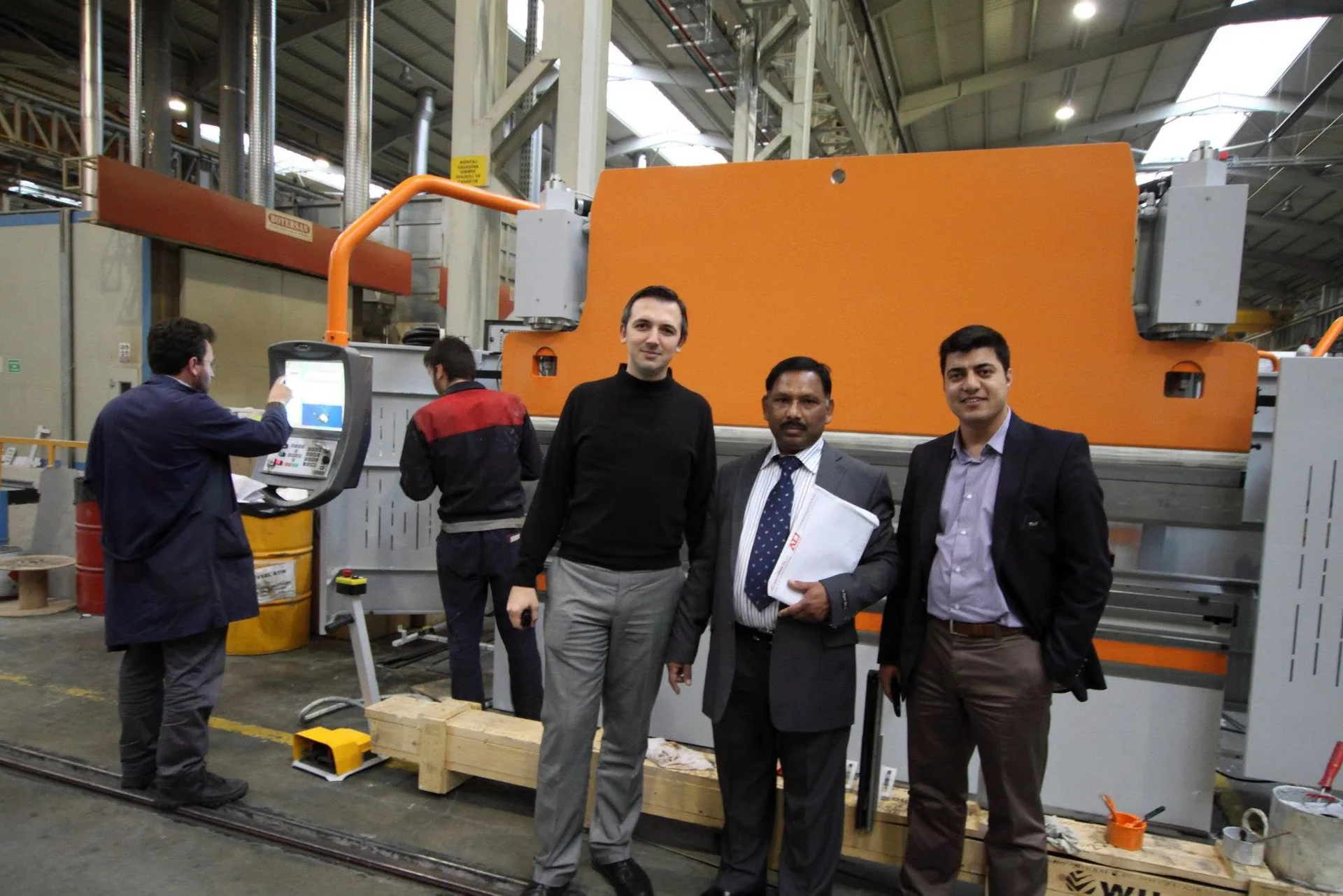
Shearing and press braking serve different steps in sheet metal fabrication. One prepares straight-cut blanks, while the other forms bends to the required geometry. ATJ International handles industrial shearing and press brake machine sourcing enquiries in Kuwait. Use this guide to define the cutting and bending requirements separately, then consider how both processes fit your workshop's material flow and production plans.
For shearing, describe the materials, thickness range, and maximum cutting length used in normal production. Include any requirements for blank dimensions, finish, and repeat quantities. Explain how sheets will be loaded and how cut pieces will move to the next operation. Ask for the proposed machine's capacity and control arrangement to be reviewed against the actual material range. Where the work includes several grades or thicknesses, list them separately so the technical comparison does not rely on a single headline capacity.
For a press brake, representative part drawings help explain the bending requirement more clearly than tonnage alone. Provide the material, thickness, bend length, angles, and relevant part dimensions. Identify any tooling already used in your workshop and ask whether it is compatible with the proposed system. Discuss the backgauge, controls, and handling needs for your typical jobs. Request technical review of the machine and tooling combination so the proposal addresses the geometry and production tasks you need to complete.
Explain how jobs are prepared, set up, checked, and moved between cutting and bending. Identify the team responsible for programming and initial part approval, and discuss the training required for the offered equipment. Review the available space for handling full sheets and larger formed components. Ask which tooling, accessories, software, installation work, and documentation are included. When comparing proposals, retain the same representative parts and scope so differences in configuration, support, and commercial inclusions can be evaluated clearly.
Share the details you have. Final specification, availability, and scope are confirmed with your quotation.
Provide drawings or a clear description of typical parts, including material grades, dimensions, and important tolerances. Explain your current production mix and any planned changes. Separate routine work from occasional oversized jobs so the specification reflects how the equipment will actually be used. A small selection of representative parts can make a sourcing discussion much more concrete.
Discuss the space available for the machine, material movement, and servicing. Ask which tooling, software, accessories, and supporting systems are included in the proposal. Identify the party responsible for site preparation, unloading, installation, and commissioning. Confirm the training and documentation you require, and request details of the applicable manufacturer support and warranty terms for the proposed equipment.
Compare options against the same part requirements and request sample work or a technical review where appropriate. Record any agreed acceptance criteria, delivery conditions, and exclusions. Ask about consumables, replacement parts, and maintenance requirements before making a purchasing decision. Machine availability, manufacturer selection, performance, lead time, and service coverage are confirmed through the individual quotation and technical specification.
Yes. Identify the machine you need and provide the relevant cutting or bending requirements. If both are required, list their specifications separately and explain the intended production sequence between the two processes.
The bending method, material, thickness, and part geometry influence tooling selection. Send representative drawings and details of existing tools. Ask for the proposed tooling to be reviewed with the specific machine and application.
Ask for tooling, controls, software, accessories, and installation to be listed in the proposal. Inclusions vary by configuration. Compare the complete quoted package against the same production requirements before selecting a machine.
Tell us what you need, where the work will take place, and your target dates. We can review the details and discuss the next step with you.