3-roll configurations
Include your material, plate dimensions, and finished shape when asking about a 3-roll machine. Request the proposed model's capacity information and discuss the handling and pre-bending sequence for your parts.
Request heavy-duty plate rolling machine sourcing for fabrication in Kuwait. ATJ International can discuss 3-roll and 4-roll plate bending machines for applications such as cylinders and curved sections.
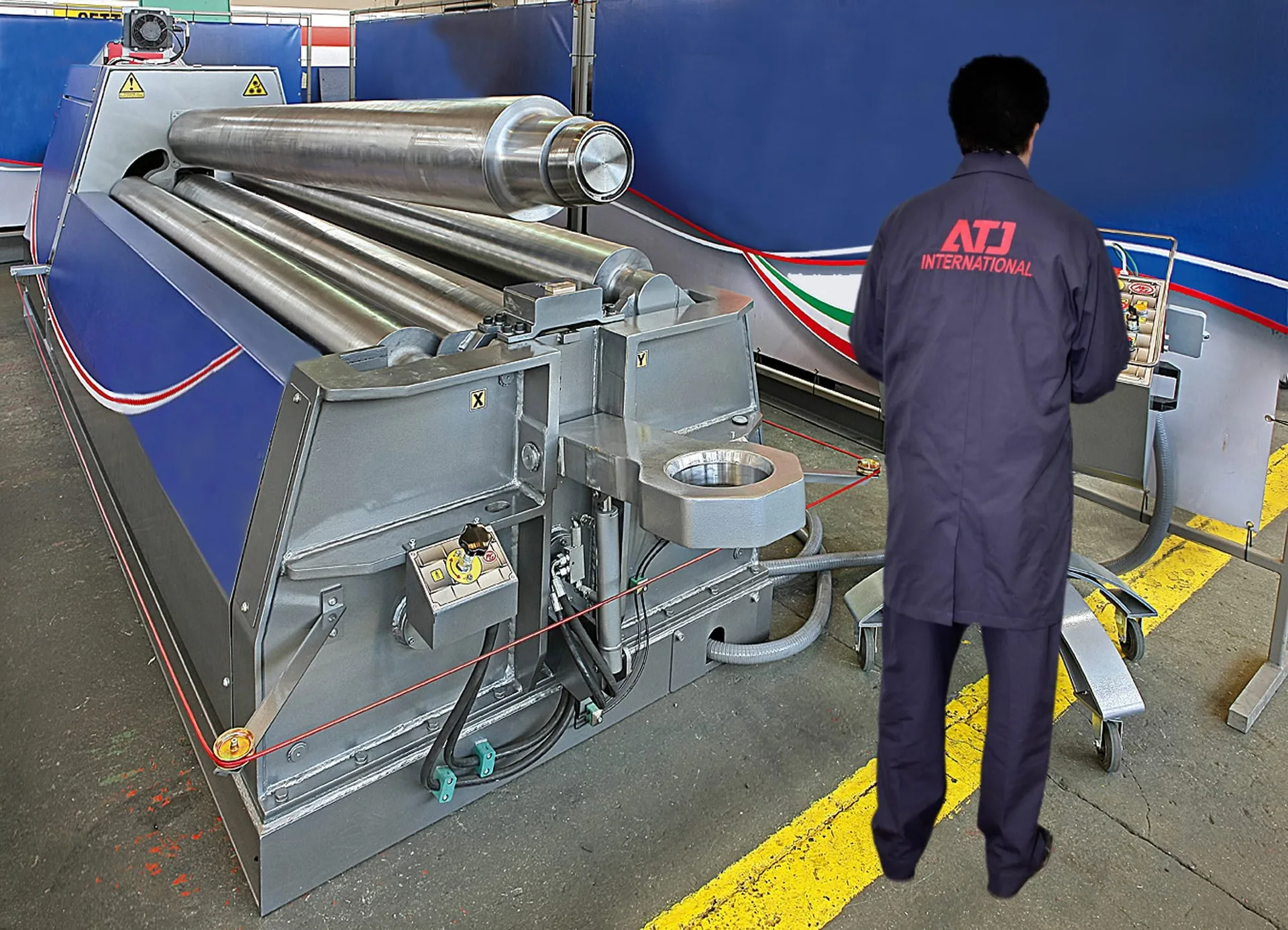
Plate rolling turns a flat plate requirement into a discussion about finished diameter, material strength, width, and handling. The machine configuration needs to reflect the shapes your workshop intends to produce. ATJ International handles enquiries for heavy-duty 3-roll and 4-roll plate rolling machines in Kuwait. Use this guide to prepare a sourcing brief for cylinders, curved sections, and other plate bending applications.
Provide the material grade, plate width, thickness, and the finished diameter or profile required. Explain whether these are routine production dimensions or an occasional maximum requirement. Include drawings showing any cone geometry or other shape that needs review. Ask for the offered machine's capacity to be assessed against these details. A statement of thickness alone does not describe the whole rolling requirement, so keeping the material and finished shape together makes the technical enquiry more useful.
Discuss how the plate will be presented to the machine, supported during rolling, and removed after forming. Identify the lifting and handling equipment already available in the workshop. Ask about the proposed pre-bending capability and any practical requirements for your part geometry. Include the available floor space and access for long or large-diameter work. Review optional supports or accessories as part of the proposal so your team can assess the complete process and the site arrangements needed around the machine.
Explain whether the workshop produces repeated shapes or a wide range of one-off work. Ask how settings, programmes, or job information are managed on the proposed machine and what training is included. Discuss the inspection requirements for completed parts and how representative work could be used during evaluation. Review installation, commissioning, maintenance documentation, and support arrangements. Compare 3-roll and 4-roll proposals against the same material and shape requirements so the differences in scope and configuration remain clear.
Share the details you have. Final specification, availability, and scope are confirmed with your quotation.
Provide drawings or a clear description of typical parts, including material grades, dimensions, and important tolerances. Explain your current production mix and any planned changes. Separate routine work from occasional oversized jobs so the specification reflects how the equipment will actually be used. A small selection of representative parts can make a sourcing discussion much more concrete.
Discuss the space available for the machine, material movement, and servicing. Ask which tooling, software, accessories, and supporting systems are included in the proposal. Identify the party responsible for site preparation, unloading, installation, and commissioning. Confirm the training and documentation you require, and request details of the applicable manufacturer support and warranty terms for the proposed equipment.
Compare options against the same part requirements and request sample work or a technical review where appropriate. Record any agreed acceptance criteria, delivery conditions, and exclusions. Ask about consumables, replacement parts, and maintenance requirements before making a purchasing decision. Machine availability, manufacturer selection, performance, lead time, and service coverage are confirmed through the individual quotation and technical specification.
Provide the parts, materials, quantities, and handling requirements first. Ask for both configurations to be reviewed where relevant. The useful comparison includes the proposed capacity, pre-bending, controls, workflow, and complete installation scope.
The finished diameter is part of the rolling requirement and affects the technical review of a machine's suitability. Include it with the plate width, thickness, and material grade so the offered capacity can be assessed for the actual part.
Yes. Send drawings and the material details, and identify how frequently that work is expected. Ask for the proposed machine's capability and any accessories or handling requirements to be confirmed for those shapes.
Tell us what you need, where the work will take place, and your target dates. We can review the details and discuss the next step with you.